You’re Running a Luxury Hotel in India. Why Are You Letting Third Parties Own Your Guest?
There’s a number that lives rent-free in the back of every General Manager’s mind in Goa, Udaipur, or Mumbai.
It’s not RevPAR or ADR.
It’s 22%.
That’s the average cut handed over every time a guest books through a third-party distributor instead of directly on your site. On a ₹50,000-a-night luxury room, that’s ₹11,000 disappearing straight off your top line—money that could have funded property updates, staff incentives, or the bespoke guest touches that justify your premium rate in the first place.
Now multiply that across thousands of room nights a year. The quiet drain on your property's profitability is staggering.
The True Cost: Breakdown of Third-Party Platform Charges
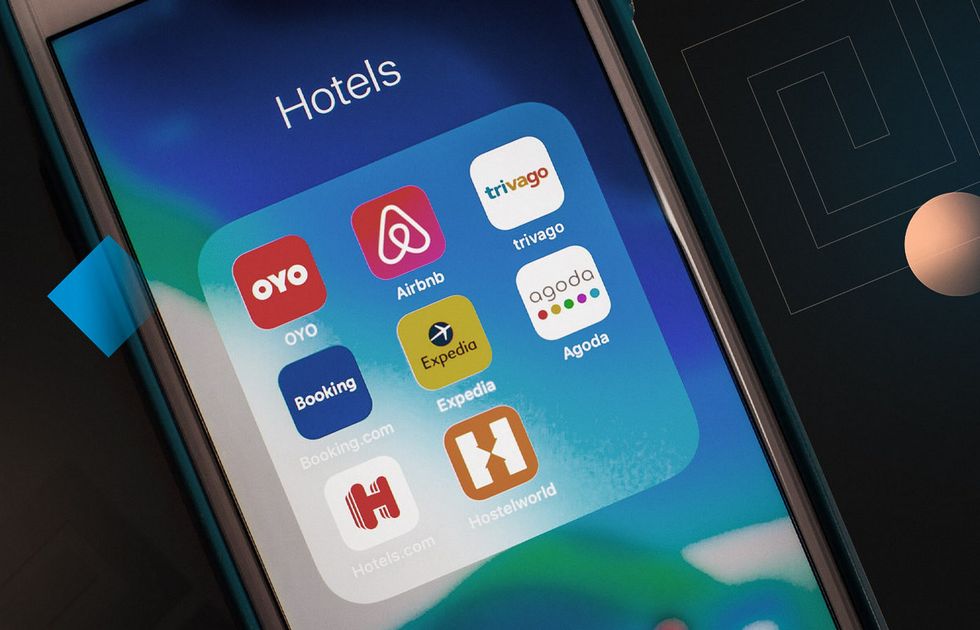
When you list your property on third-party channels, you aren't paying a flat, predictable advertising fee. You are paying high variable commissions on gross transaction value—frequently stacked on top of taxes, local levies, and mandatory discount programs.
| Channel / Tier | Typical Base Commission (India) | Boost / Tiered Visibility Rates |
| Leading Domestic Booking Engines | 18% – 25% | Up to 30% – 35% for top search placement & corporate access tiers |
| Major Global Online Agencies | 15% – 20% | Up to 25% for preferred status or visibility boosters |
| Regional Travel Aggregators | 15% – 22% | Up to 25%+ via growth and display programs |
| International Travel Networks | 15% – 25% | Up to 30% for accelerated exposure tools |
The Hidden Financial Layers in the Indian Market
- GST on Commission: In India, third-party platforms charge 18% GST on the commission itself. While hotels can claim input tax credit (ITC) on this, it locks up your cash flow during monthly settlement cycles.
- TDS Mechanics (194-O & 194H): Settlements from domestic platforms undergo mandatory Tax Deducted at Source (TDS) under Section 194-O or 194H. Reconciling these net payouts against your property management system's gross revenue is a finance team nightmare.
- Forced Program Participation: Platforms push properties into network-wide campaigns—such as bank discount days or loyalty member programs—which shave another 10–20% off your ADR on top of the standard commission.
- Delayed Cash Flows: While direct website payments settle instantly via UPI or credit card, external distributors can hold payouts anywhere from 7 to 30 days post-checkout.
What You Lose Beyond the Ledger
The financial hit is painful, but the operational damage runs deeper.
1. You lose the relationship before it starts
When a traveler books through a third-party aggregator, that platform is the brand they engaged with. You are reduced to a vendor. They arrive at your resort without the warm pre-arrival touches that define luxury Indian hospitality.
2. You sacrifice valuable guest data
Third-party booking platforms obscure guest data behind masked emails. You receive no long-term behavioral history, no direct mobile or messaging contact, and no email address. As a result, you are flying blind: unable to personalize, unable to offer pre-stay upgrades, and unable to build a direct remarketing database.
3. You get cut out of the loyalty loop
Guests who book direct are statistically more loyal, spend significantly more on F&B and spas, and return more frequently. Third-party guests, by definition, are comparison shopping on aggregators designed to commoditize your property against competitors next door.
4. You surrender pricing authority
Soft rate-parity rules and algorithm penalties constrain your freedom to reward direct bookers. Third parties set the baseline, forcing you to negotiate your own room value upward from a floor dictated by external intermediaries.
The Myth of "Free" Distribution
It is easy to view third-party bookings as "free marketing." That is expensive, dangerous logic.
The guest acquisition cost on a third-party booking is substantially higher than a targeted search campaign, a meta-search strategy, or a tailored messaging campaign for past guests. The difference? The commission expense is deducted before the cash hits your bank account, keeping it hidden from traditional departmental expense lines.
A ₹50,000 third-party booking is not a ₹50,000 booking. It is a ₹39,000 booking with an ₹11,000 marketing tax. If your internal marketing team presented a campaign with a 22% acquisition cost, your CFO would demand answers. External distribution should not be exempt from that same scrutiny.
How High-Margin Indian Luxury Hotels Shift the Balance
Luxury properties pulling meaningful share away from external aggregators execute four fundamental strategies:
- Make Direct Booking the Superior Deal: Don't fight on price alone—win on value. Offer complimentary airport transfers, complimentary high tea, early check-in, flexible cancellation, or priority suite upgrades exclusively to direct bookers.
- Leverage Frictionless Payment Methods: Ensure your direct booking engine supports Indian payment preferences—UPI, Instant Net Banking, and Credit Card EMI options—to eliminate drop-offs at checkout.
- Treat First-Party Data as an Asset: Guest preferences, stay histories, and opt-in contact details form your property's competitive moat. Every direct booking strengthens that moat; every third-party booking erodes it.
- Retarget Leaked Traffic: When a guest leaves your site without converting, target them with localized digital ads to pull them back to your direct channel for a fraction of what a 22% commission would cost.
Summary
Third-party commissions represent one of the largest controllable costs on a hotel’s P&L, yet they remain under-scrutinized because they are deducted prior to net revenue recognition.
The goal isn't to eliminate external distribution channels entirely—they serve a purpose for broad top-of-funnel discovery. The goal is to end your dependency on them, protect your margins, and reclaim ownership of the guest relationship from day one.